

| Index | Unit | Grade | ||||||||
| SG1 | SG2 | SG3 | SG4 | SG5 | SG6 | SG7 | SG8 | |||
| Viscosity No. | Ml/g | 156-144 | 143-136 | 135-127 | 126-119 | 118-107 | 106-96 | 95-87 | 86-73 | |
| K Value | 76-75 | 74-73 | 72-71 | 70-69 | 68-66 | 65-63 | 62-60 | 59-55 | ||
| Average degree of polymerization | 1785-1536 | 1535-1371 | 1350-1250 | 1250-1150 | 1100-1000 | 950-850 | 750-650 | 740-650 | ||
| Foreign Particle | 30 max | 30 max | 30 max | 30 max | 30 max | 30 max | 40 max | 40 max | ||
| Volatile Matter | % | 0.4 max | 0.4 max | 0.4 max | 0.4 max | 0.4 max | 0.4 max | 0.4 max | 0.4 max | |
| Apparent Density | g/ml | 0.42 min | 0.42 min | 0.42 min | 0.45 min | 0.45 min | 0.45 min | 0.45 min | 0.45 min | |
| Particle Size | 0.25mm Sieve | % | 2.0 max | 2.0 max | 2.0 max | 2.0 max | 2.0 max | 2.0 max | 2.0 max | 2.0 max |
| 0.063 mm Sieve | 90min | 90min | 90min | 90min | 90min | 90min | 90min | 90min | ||
| No. of fish eye/400cm2 | 40 max | 40 max | 40 max | 40 max | 40 max | 50 max | 50 max | 50 max | ||
| Plasticizer absorption of 100g resin | G | 25 min | 25 min | 25 min | 22 min | 17 min | 15 min | 14 min | 14 min | |
| VCM Residue | Ppm | 10 max | 10 max | 10 max | 10 max | 10 max | 10 max | 10 max | 10 max | |
Poly Vinyl Chloride (PVC), SPECIAL USE CHEMICALS
Standard Poly Vinyl Chloride (PVC) SG5 Standard PVC, PVC1091
CAS Number:
9002-86-2
Other Trading Names:
- White powder PVC Resin
- PVC Hompolymer Resin
- Asaflex 805
- K-Resin KRO03
- PVC K65, K66, K67
Type of Packaging :
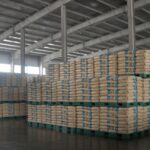
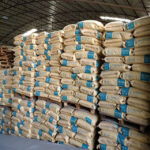
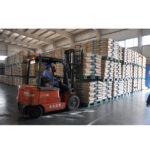
- 25kg net paper-plastic bags
HS Code:
390410
Chemical appearance:
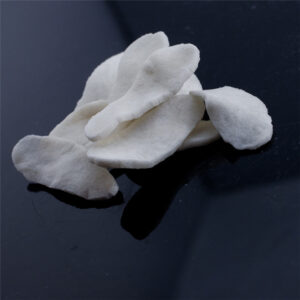
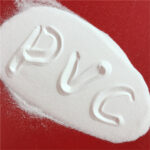
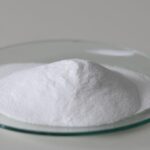
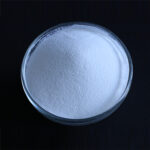
Poly Vinyl Chloride (PVC) Resin of various grades appears in the white powder form. PVC Resin is insoluble in gasoline, ethanol, and water and is also thermoplastic in nature. It shows expandability and solubility in ether, aromatic hydrocarbons, fatty chloro-hydrocarbons, or ketones. Furthermore, PVC resin also depicts stronger resistance towards corrosion alongside effective dielectric properties.
Chemical application and strengths:
- The promising chemical and physical properties of Poly Vinyl Chloride (PVC) Resin are responsible for their wide range of applications. PVC Resin finds applications in almost every industry, such as construction, agriculture, food packaging, mechanical instruments, chemical industry, transportation, and electronics. The different grades of PVC Resin have unique applications. Take a look below to find the applications of each grade of PVC Resin.
- PVC Resin SG1 is suitable for the production of high-grade electrical insulation materials. SG2 is utilized in the production of electrical insulating materials as well as film and common soft products. SG3 grade of PVC Resin finds applications in the production of electrical insulation materials also. In addition, it is also used for the production of daily-use plastic products such as artificial leather, industry packaging, raincoats, shoe-making materials, and films. PVC Resin SG4 is used for the production of membranelle for industrial and civil use as well as tubes and pipes.
- SG5 is one of the widely used variants of PVC Resin with applications in the production of transparent products section bar and decorative materials such as rigid plates, PVC windows, doors, and pipes. SG6 is used for the production of hardboard, welding rods, and clear foil. SG7 and SG8 are used for the production of hard injection molding and clear foil.